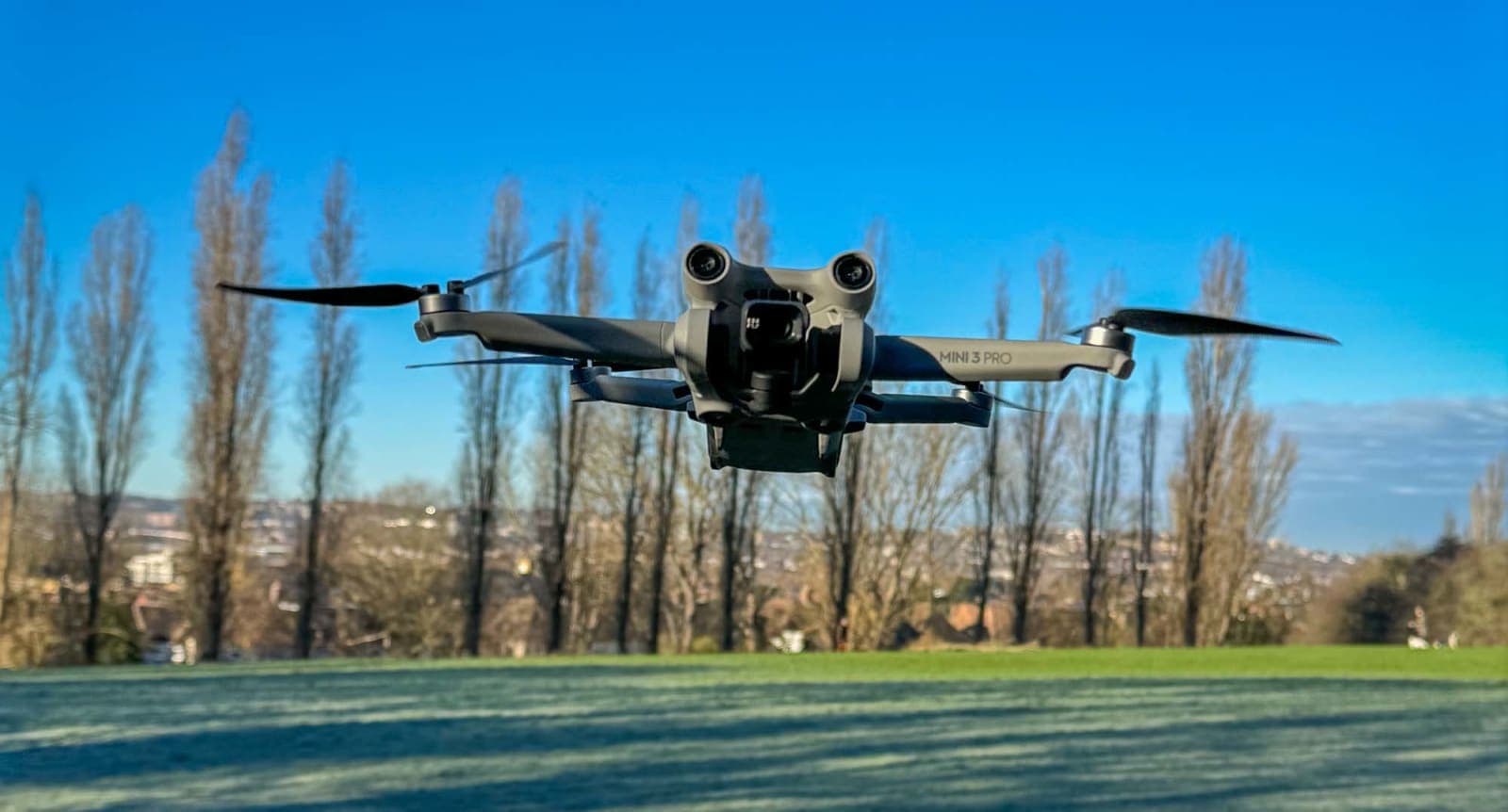
What Makes the Mini 3 Pro Special in 2026
When DJI launched the Mini 3 Pro in May 2022, it redefined what a sub-250g drone could do. Fast forward to 2026, and while newer models like the Mini 4 Pro and Mini 5 Pro have arrived, the Mini 3 Pro still delivers 90% of their capabilities at nearly half the price.
The core features that made it revolutionary haven't changed:
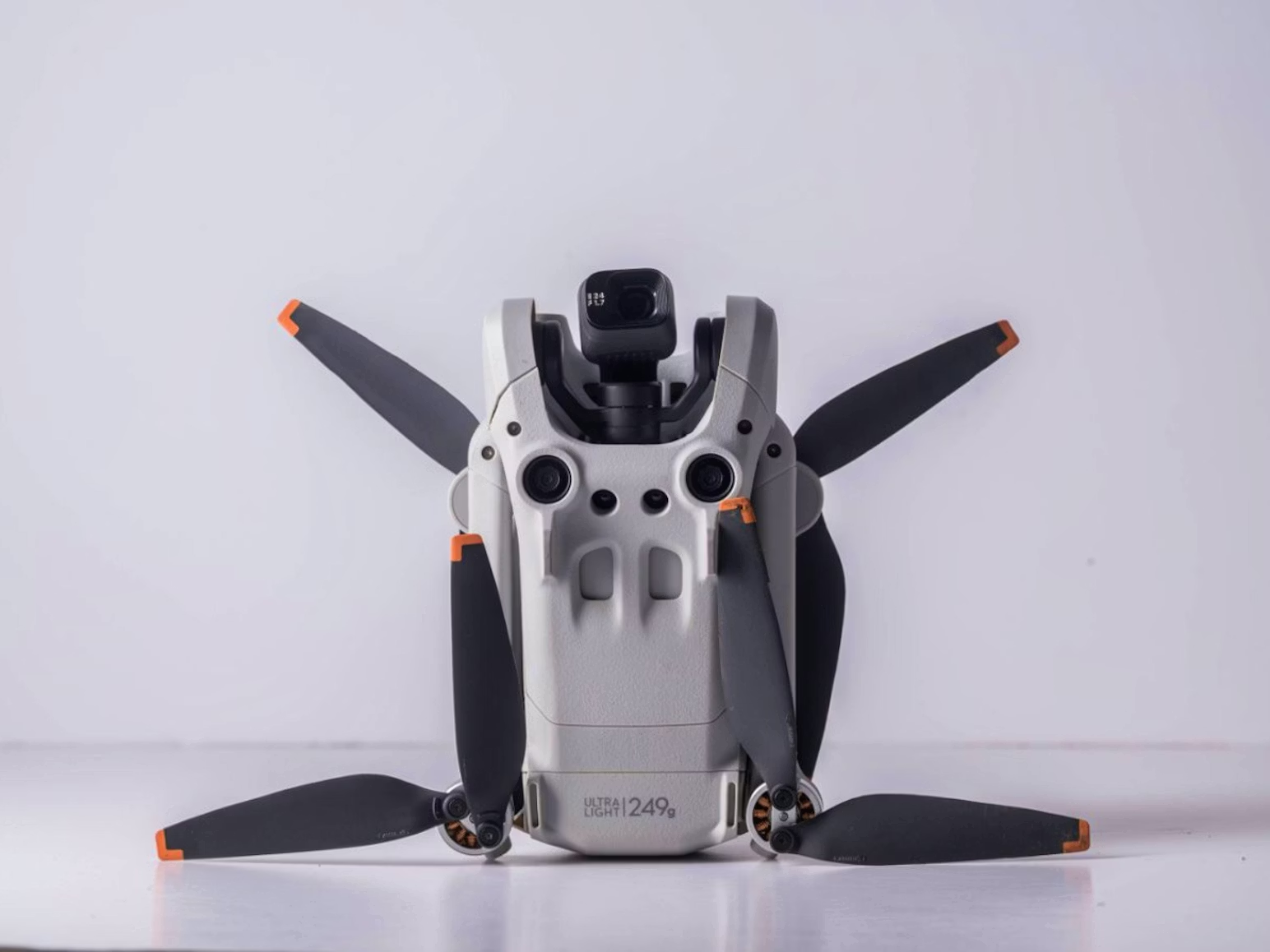
Under 250g (no registration needed in UK)
4K/60fps video with 1/1.3-inch sensor
Vertical shooting mode (native portrait orientation)
34-minute flight time (longer than newer models)
48MP photos for high-quality stills
These specs made it groundbreaking in 2022, and they're still highly competitive today.
How It Compares to Newer Models
Let's address the elephant in the room: yes, there are newer DJI Mini drones. So why choose the older model?
Mini 4 Pro (2023)
What it adds:
360-degree obstacle avoidance
Slightly better ActiveTrack
Enhanced night video
Current used price: £650-750
Mini 5 Pro (2025)
What it adds:
Full 1-inch sensor (vs 1/1.3-inch)
Better low-light performance
8K timelapse mode
Current new price: £1,000+
Mini 3 Pro Advantages
What it still does better:
Longest flight time: 34 minutes real-world
Proven reliability: 4 years of firmware updates
Best value: £440 used vs £1,000+ new
Same weight class: Regulation-friendly
For most creators, the Mini 3 Pro's shortcomings are far outweighed by its strengths—especially at current used prices.
Four Reasons the Mini 3 Pro Still Excels
1. Battery Life Champion
Here's something DJI won't advertise: the Mini 3 Pro outlasts its successors in flight time.
Real-world flight times:
Mini 3 Pro: 32-34 minutes typical
Mini 4 Pro: 28-31 minutes typical
Mini 5 Pro: 27-30 minutes typical
Those extra 4-6 minutes per flight mean:
Fewer battery swaps during shoots
More shots per session
Better value when buying extras (£80 each)
Less stress on tight shooting schedules
2. True Vertical Shooting Mode
The gimbal physically rotates 90 degrees for native portrait video—perfect for Instagram Reels, TikTok, and YouTube Shorts. No cropping, no quality loss.
Why this matters in 2026:
Social media = vertical content dominance
Full 9:16 aspect ratio without crop
Saves hours in post-production
Professional look for social platforms
While newer models inherited this feature, the Mini 3 Pro pioneered it and it works flawlessly.
3. Still Regulation-Friendly
At 249 grams, the Mini 3 Pro sits just under the 250g threshold, meaning:
No operator ID needed for recreational flying (UK)
More flexible flying locations
Easier international travel
Lower insurance costs for commercial use
Drone regulations have tightened in 2026, making this weight class more valuable than ever.
4. The Sensor Is Still Excellent
Yes, the Mini 5 Pro has a larger sensor. But the Mini 3 Pro's 1/1.3-inch sensor still captures:
48-megapixel stills
4K/60fps video
HDR video
10-bit D-Log M for colour grading
Unless you're shooting in extreme low light or need maximum dynamic range for commercial work, the Mini 3 Pro's sensor is more than capable. Remember: your audience watches on phones and laptops, not cinema screens.
Where It Falls Short (And Why It Doesn't Matter)
Let's be honest about limitations:
Limited Obstacle Avoidance
Reality: Only downward and forward sensors. No 360-degree sensing.
Why it's okay:
Fly with awareness (good practice anyway)
Most crashes = pilot error, not sensor failure
Saving £400+ covers insurance and spare props
Professional pilots managed fine before omnidirectional sensors
Smaller Sensor Than Mini 5 Pro
Reality: Less light capture and dynamic range than 1-inch sensor.
Why it's okay:
Daylight shooting looks nearly identical
HDR mode compensates well
Clients won't notice unless pixel-peeping
Most viewing is compressed social media
No Latest AI Features
Reality: Missing ActiveTrack 5.0 and some new AI modes.
Why it's okay:
ActiveTrack 4.0 works brilliantly
Core shooting capabilities unchanged
Simplicity = less menu diving
Gear doesn't make content—creativity does
The Money: Why Used Makes Sense Now
Here's where buying used in 2026 is exceptional value.
Price Comparison
Mini 5 Pro Setup (New):
Drone with DJI RC: £1,049
Extra battery: £89
ND filters: £65
Case: £45
Total: £1,248
Mini 3 Pro Setup (Used):
Drone with DJI RC: £440
Extra battery: £80
ND filters: £60
Case: £40
Total: £620
You save: £628 (enough for editing software, lights, or a gimbal)
The Value Equation
At £440, you're getting a drone that launched at £759—that's 42% off for a product that's still highly capable. The Mini 3 Pro has passed through steep depreciation and is now in the "reliable value" zone.
Compare this to the Mini 5 Pro at £1,000+, and the choice becomes clear for budget-conscious creators.
Who Should Buy This Drone
Perfect For:
Travel Content Creators
Lightweight for backpacking
Long flight time maximises shooting windows
Vertical mode for social content
Real Estate Photographers
Professional 4K for listings
Stable footage for virtual tours
Budget-friendly for small operators
Social Media Influencers
Native vertical video
QuickShots automated movements
Easy editing in DJI Fly app
Hobbyist Pilots
Approachable price point
Capable enough to grow into
Great learning platform
Budget Professionals
Backup drone
B-roll and establishing shots
Low-risk overseas shoots
Not Ideal For:
Low-light specialists (smaller sensor struggles)
Commercial pilots needing full obstacle avoidance
Those who must have latest technology
Must-Have Accessories
Essential additions:
Extra batteries (£80 each) - Get 2 minimum
ND filter set (£60) - For proper exposure control
Propeller guards (£25) - Indoor/tight spaces
Landing pad (£15) - Protects gimbal
Fast memory cards (£30) - 128GB UHS-I minimum
Total accessories: £210-290 (still well under new Mini 5 Pro cost)
Final Verdict
The Mini 3 Pro hasn't become obsolete—it's become affordable. What cost £759 in 2022 delivers the same performance for £440 used, while newer models command premiums for incremental improvements.
Buy it if:
You want excellent aerial footage without breaking the bank
Social media vertical content matters to you
You fly primarily in good lighting
You value battery life and portability
You're a careful pilot
You appreciate proven reliability over bleeding-edge features
Skip it if:
You frequently shoot in very low light
You need omnidirectional sensing for commercial work
Budget isn't a constraint
You must have the absolute latest tech
For most drone enthusiasts, content creators, and professionals doing supplementary aerial work, the Mini 3 Pro at £440 used is exceptional value in 2026.
Quick Answer Guide
Q: Will DJI keep supporting it?
A: Yes, expect firmware updates through at least 2027.
Q: Can I use Mini 4 Pro batteries?
A: No, not cross-compatible.
Q: Is it legal to fly in UK without registration?
A: Yes for recreational use under 250g.
Q: How's the wind performance?
A: Rated for Level 5 winds (29-38 km/h), adequate for most conditions.
Q: What's the range?
A: Up to 12km with DJI RC, though you must maintain visual line of sight per UK regulations.
Where to Buy Quality Used Mini 3 Pro
When buying used, look for sellers offering:
Detailed condition assessments
Flight testing before sale
30-day return policies
Transparent pricing
Included accessories
Check Current Used DJI Mini 3 Pro Stock at UsedGears →
The Bottom Line
The DJI Mini 3 Pro proves that "good enough" is often more than enough—especially when it costs less than half the price of "perfect."
Save the £600 difference. Invest in skills, not specs. Your footage will thank you.
Related Reading:
What to Check When Buying a Used DJI Drone ← Essential inspection guide
DJI Mini 3 Pro: Complete Settings & Tips Guide ← Maximise your drone
7 Creative Shots Only Possible with Vertical Mode ← Get inspired
Questions about the Mini 3 Pro? Contact our team for personalised advice on buying used drones.
Discussion
Be the first to share your thoughts
No comments yet. Be the first to share your thoughts.