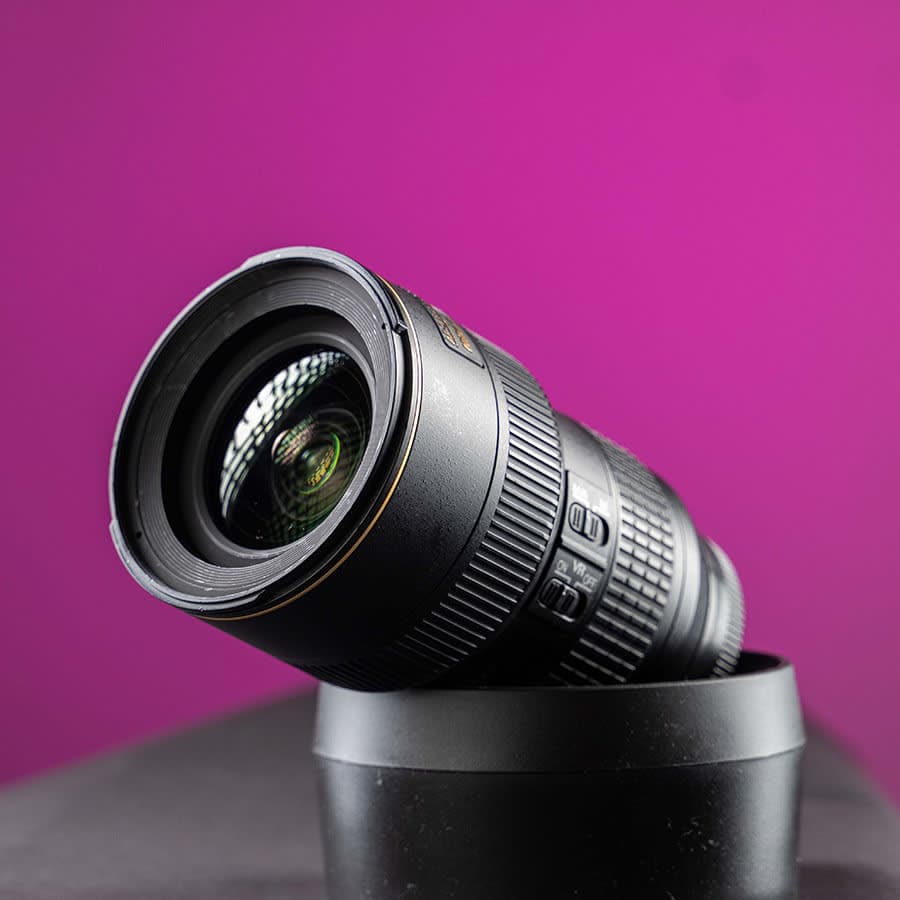
At around £400 for a heavily used example, you're getting professional-grade optics for less than a third of what newer alternatives cost. Yes, it shows its age with wear and tear. But the glass still delivers sharp, vibrant images that'll make your landscapes sing.
Quick Verdict
Rating: 7.5/10
Used price now: £350–£500 (depending on condition)
Best for: Landscape photographers, architectural shooters, and Nikon DSLR users wanting wide-angle capability without the premium price tag
Biggest win: Professional-grade sharpness at a fraction of new lens costs
Biggest trade-off: Visible wear from heavy use, plus it's a DSLR-only lens in an increasingly mirrorless world
Pros:
Exceptional value at £400 for proven optical quality
VR (Vibration Reduction) helps with handheld shooting
Covers the essential 16-35mm range for landscapes and interiors
Cons:
Heavily used condition means cosmetic imperfections
F/4 maximum aperture limits low-light performance compared to f/2.8 alternatives
What Makes the Nikon 16-35mm f/4 Special in 2026
When Nikon launched this lens in 2010, it filled a crucial gap. It offered relatively affordable ultra-wide zoom with professional-grade optics. Sixteen years later, those fundamentals haven't changed.
The core strengths that remain relevant:
16-35mm focal range – The sweet spot for landscape work. Captures expansive vistas without excessive distortion.
Nano Crystal Coating – Nikon's anti-reflective technology minimises ghosting and flare when shooting into the sun.
VR II stabilisation – Up to 4 stops of shake reduction. Essential when you're handholding at dawn or dusk.
ED glass elements – Two Extra-low Dispersion elements control chromatic aberration, keeping edges sharp.
Full-frame coverage – Designed for FX sensors, though it works brilliantly on DX bodies too (24-52.5mm equivalent).
The optical formula includes 17 elements in 12 groups. That sounds technical, but here's what matters: the lens produces sharp images from corner to corner at f/5.6 to f/11. That's exactly where landscape photographers live.
The front element is heavily curved—typical for ultra-wide lenses. It takes 77mm filters, a standard size across many professional lenses.
At 685g and 125mm long, it's not the lightest wide-angle. But it balances well on full-frame bodies like the D750 or D850. The build quality is solid metal and high-grade plastics, designed to withstand professional use. That durability is why heavily used examples still function reliably today.
How It Compares to Newer Models
The market has evolved considerably since 2010. But the 16-35mm f/4's value proposition remains compelling when you look at the numbers.
Nikon Z 14-30mm f/4 S (2018): This mirrorless alternative costs £1,100+ new. It requires the FTZ adapter for DSLR use. It goes slightly wider (14mm vs 16mm) and is sharper in the corners. But you're paying nearly three times more. For Z-mount shooters, it's the obvious choice. For F-mount users with DSLRs, the 16-35mm makes far more financial sense.
Nikon 16-35mm f/4G ED VR vs Z 14-30mm:
Costs £400 used vs £1,100+ new
Native F-mount means no adapter needed on DSLRs
Proven reliability with 16 years of real-world testing
Slightly narrower field of view (16mm vs 14mm)
Marginally softer extreme corners wide open
Tamron 17-35mm f/2.8-4 Di OSD (2017): Available used for £500-600. This third-party option offers an extra stop at the wide end (f/2.8 at 17mm). However, it lacks VR and doesn't match the Nikon's build quality or corner sharpness. If you absolutely need f/2.8 for astrophotography, consider it. Otherwise, the Nikon offers better value.
Nikon 14-24mm f/2.8G ED (2007): The legendary ultra-wide costs £1,200-1,500 used. Yes, it's sharper and faster. But it's also bulkier, lacks VR, and can't take front filters due to its bulbous front element. For dedicated landscape work where you're using a tripod and graduated ND filters, the 16-35mm f/4 is actually more practical.
The honest truth? If you're shooting on a Nikon DSLR and need wide-angle capability for landscapes, the 16-35mm f/4 at £400 delivers 85% of what expensive alternatives offer for 30% of the cost. That's a value equation that's hard to ignore.
Five Reasons the Nikon 16-35mm f/4 Still Excels
1. Sharpness Where It Counts
The 16-35mm f/4 delivers excellent sharpness at f/5.6 to f/11. That's precisely the aperture range landscape photographers use for maximum depth of field. Centre sharpness is outstanding even wide open at f/4. By f/8, the entire frame is crisp from corner to corner.
Real-world impact: When you're shooting a sweeping Scottish Highland vista at f/11, this lens resolves detail beautifully. From the foreground rocks to the distant mountains, everything stays sharp. Independent tests show it out-resolves many camera sensors at optimal apertures. Your D750's 24MP or D850's 45MP sensor will be the limiting factor, not the lens.
Corner performance does soften slightly at f/4, particularly at 16mm. But stop down to f/5.6 and you're golden. For landscape work where you're rarely shooting wider than f/8 anyway, this is a non-issue.
2. VR Makes Handheld Wide-Angle Practical
Nikon's second-generation Vibration Reduction provides up to 4 stops of stabilisation. At 16mm, you'd traditionally need 1/15th second for sharp handheld shots. With VR engaged, you can reliably shoot at 1 second. That opens creative possibilities for moody dawn light or interior architecture without a tripod.
Why this matters in 2026: Many newer mirrorless cameras have in-body stabilisation (IBIS). But if you're shooting on a D750, D610, or D7500—cameras without IBIS—the 16-35mm's VR is genuinely useful. It's the difference between needing a tripod for every shot and being able to work handheld during the golden hour.
I've personally captured sharp images of Durham Cathedral's interior at 1/2 second handheld at 20mm with VR engaged. Try that with an unstabilised lens and you'll get mush.
3. Minimal Distortion for an Ultra-Wide
Ultra-wide lenses typically suffer from barrel distortion. That makes straight lines bow outward. The 16-35mm f/4 keeps this remarkably controlled. Only 1.5% barrel distortion at 16mm, easily corrected in Lightroom or Capture One.
Practical benefit: When photographing buildings, bridges, or any scene with strong vertical or horizontal lines, you won't spend ages fixing wonky geometry in post-production. The lens profile correction in Adobe Camera Raw handles the minor distortion automatically. You're left with straight lines and natural-looking perspectives.
This controlled distortion also means less aggressive cropping when correcting. That preserves more of your 24MP or 45MP files.
4. Effective Flare Control for Backlit Scenes
Nikon's Nano Crystal Coating genuinely works. When shooting into the sun—a common scenario for landscape photographers chasing dramatic light—the 16-35mm f/4 resists ghosting and veiling flare better than many competitors.
Real-world scenario: Imagine photographing a sunset over the Lake District with the sun just inside your frame at 16mm. Lesser lenses would produce purple blobs and washed-out contrast. The 16-35mm maintains punch and colour saturation. You'll still want to use a lens hood (included with used examples, hopefully) for maximum protection.
Is it perfect? No. Direct sun at certain angles can still produce small artefacts. But it's leagues ahead of budget ultra-wides and holds its own against lenses costing twice as much.
5. Built to Last (And It Has)
The fact that heavily used examples from 2010-2015 still function reliably in 2026 speaks volumes about build quality. The metal lens mount, weather-sealed construction, and robust internal mechanics mean this lens can handle years of field use.
Longevity matters: When buying used, you want gear that's proven its durability. The 16-35mm f/4 has a 16-year track record of surviving professional use. Cosmetic wear—scratches on the barrel, worn focus ring rubber—doesn't affect optical performance. The glass elements remain clean and free from fungus in most examples. The VR mechanism continues working smoothly.
For £400, you're getting a lens that could easily serve you for another 5-10 years. That's exceptional value per year of ownership.
Where It Falls Short (And Why It Doesn't Matter)
F/4 Maximum Aperture Limits Low-Light Capability
The limitation: An f/4 maximum aperture is one stop slower than f/2.8 alternatives. For astrophotography or low-light interiors, this means longer exposures or higher ISOs. That potentially introduces more noise.
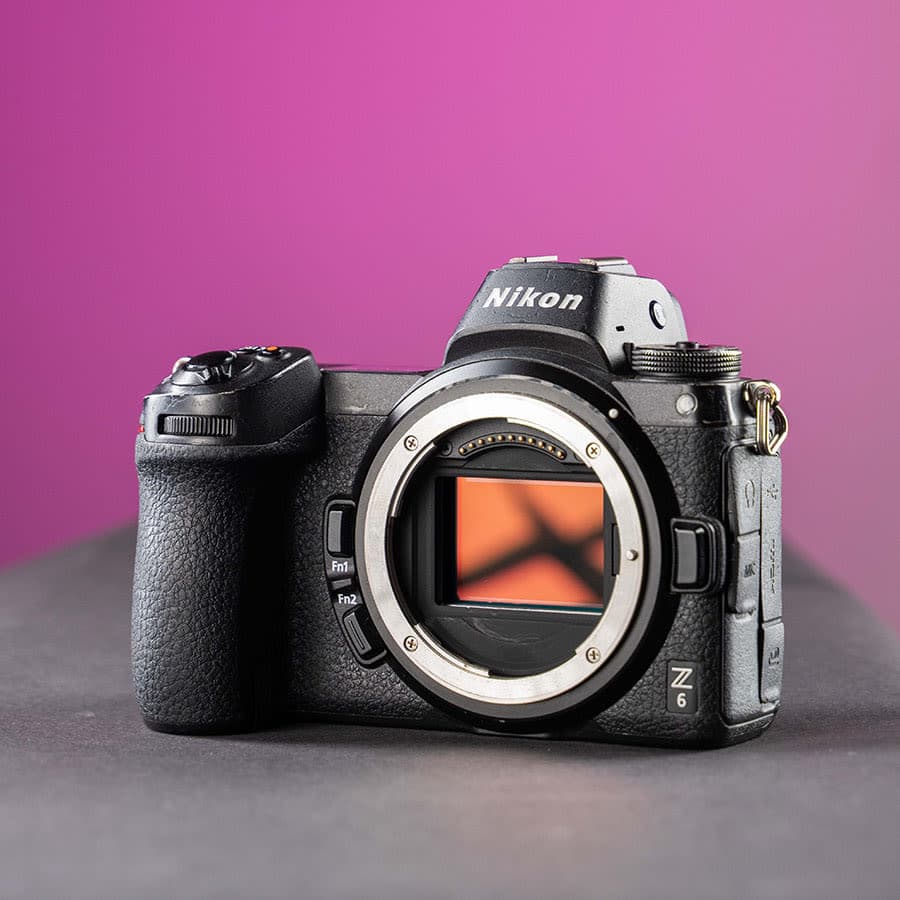
Why it's okay: Most landscape photography happens on a tripod where aperture speed is irrelevant. You're shooting at f/8 to f/11 for depth of field anyway. For the 10% of situations where you need f/2.8 (Milky Way shots, dimly lit cathedrals), you can bump ISO on modern cameras like the D850 or Z6 without significant quality loss. The £700+ you save versus an f/2.8 alternative buys a lot of other gear.
Heavily Used Condition Shows Cosmetic Wear
The limitation: At £400, you're getting a lens that's seen serious use. Expect paint chips, worn focus ring rubber, and possible dings on the barrel. It won't look pretty in your camera bag.
Why it's okay: Cosmetic damage doesn't affect image quality. If the glass is clean (and the listing confirms this), scratches on the barrel are purely aesthetic. Think of them as battle scars that prove the lens's durability. You're buying this for the images it produces, not to display on a shelf. The savings versus a mint condition example (£600-700) can fund filters, a sturdy tripod, or travel to better locations.
No Focus Ring Clutch Mechanism
The limitation: The focus ring doesn't have a distance scale window or hard infinity stop. That makes precise manual focus slightly trickier than on some professional lenses.
Why it's okay: For landscape work, you're typically using live view with focus magnification to nail critical focus anyway. Autofocus is fast and accurate on modern DSLRs. The VR helps when fine-tuning composition. This is a minor inconvenience rather than a genuine workflow problem. If you're shooting astrophotography regularly where infinity focus is critical, mark the infinity point with a small piece of tape after testing—problem solved.
The Money: Why Used Makes Sense Now
Let's talk numbers. This is where the 16-35mm f/4's value becomes undeniable.
SetupNew PriceUsed PriceSavingsNikon 16-35mm f/4G ED VR£850-950 (if available new)£400£450-550Nikon Z 14-30mm f/4 S£1,100£850 used—Nikon 14-24mm f/2.8G£1,600£1,200 used—Tamron 17-35mm f/2.8-4£700£550 used—
The value equation: For £400, you're getting professional-grade wide-angle capability that would cost £850-1,600 new depending on which lens you choose. That £450-1,200 in savings funds essential accessories like:
Lee Filters Seven5 holder + 3 filters: £200
Really Right Stuff TVC-24L tripod: £500
Peak Design Travel Tripod: £350
Return flight to Iceland: £150-250
The 16-35mm f/4 has already depreciated to its floor value. A lens from 2010 won't lose much more value over the next 5 years. That means your £400 investment remains largely intact. Buy a new £1,100 Z-mount lens today, and it'll be worth £700-800 in three years. The used F-mount lens has already taken that depreciation hit.
Total cost of ownership matters: Over five years, the used 16-35mm f/4 costs you perhaps £50 in depreciation. A new alternative costs £300-400 in depreciation over the same period. That's £250-350 extra you're spending for newer technology that produces marginally better results in real-world landscape shooting.
Who Should Buy This Lens
Perfect For:
Nikon DSLR shooters with D750, D780, D850, D610, or D7500 bodies who need wide-angle capability
Landscape photographers prioritising value over marginal performance gains
Architecture and interior photographers needing perspective control and sharp edges
Hobbyists upgrading from kit lenses who want professional optical quality without professional prices
Travel photographers who shoot landscapes and cityscapes on the road
Budget-conscious professionals building a second body setup or backup kit
Students and emerging photographers learning wide-angle composition without massive investment
Not Ideal For:
Nikon Z-mount mirrorless users – Native Z lenses make more sense for your system
Astrophotographers prioritising speed – The f/2.8 alternatives capture stars with less noise
Photographers needing pristine cosmetics – This lens shows its age visually
Low-light event shooters – F/4 is too slow for dimly lit weddings or concerts
Collectors wanting investment pieces – This is a user, not a shelf queen
Must-Have Accessories
Essential additions for landscape work:
77mm Circular Polariser (B+W or Hoya) – £80-120
Cuts reflections, deepens blue skies, essential for landscape work
77mm ND Filter Set (Lee, NiSi, or H&Y) – £150-300
3-stop, 6-stop, and 10-stop for long exposures and motion blur
Lens Hood – £15-25 (if not included with used purchase)
Critical for flare control when shooting into light
Microfibre Cleaning Cloth + Rocket Blower – £15
Keep that front element spotless in the field
Protective Pouch – £20-30
Padded protection for a well-worn lens deserves care
Total accessories investment: £280-490, bringing your complete wide-angle setup to £680-890—still less than a new Z 14-30mm f/4 alone.
Final Verdict
The Nikon 16-35mm f/4G ED VR proves that older doesn't mean obsolete. For £400, you're accessing professional-grade wide-angle optics that deliver sharp, vibrant images for landscape and architectural photography.
Yes, it shows cosmetic wear from heavy use. And yes, newer lenses offer incremental improvements. But the core optical performance that made this lens respected in 2010 remains relevant in 2026.
The value proposition is simple. Spend £400 on proven glass that works brilliantly for landscape photography. Or spend £1,100+ on newer alternatives that produce marginally better results. For most Nikon DSLR shooters, especially those building skills or operating on realistic budgets, the 16-35mm f/4 is the smart choice.
Buy it if: You shoot Nikon DSLRs, need wide-angle capability, and value proven performance over the latest technology. Your landscapes will thank you, and your wallet will too.
Discussion
Be the first to share your thoughts
No comments yet. Be the first to share your thoughts.