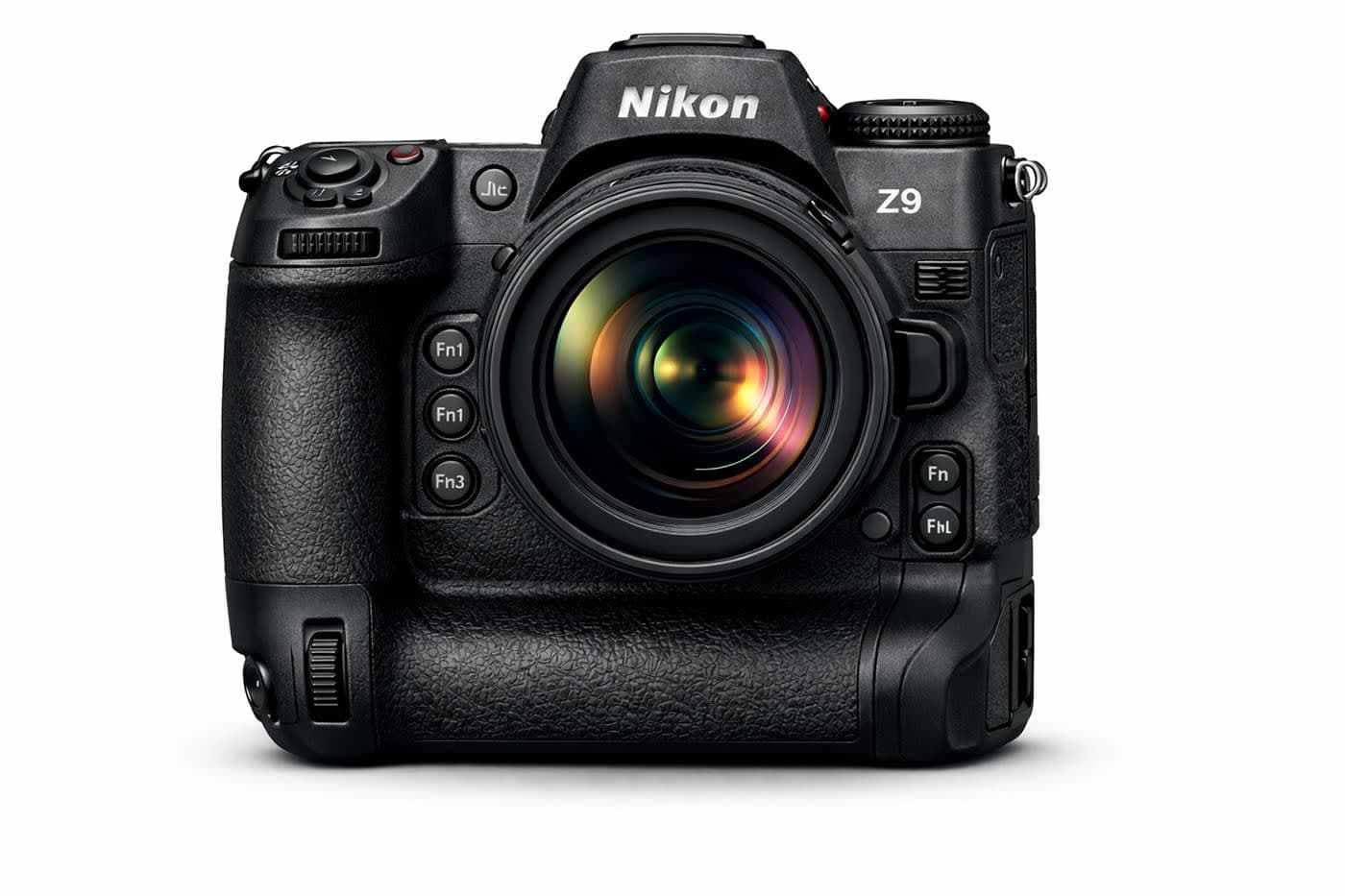
Nikon first planned to announce development in late 2025 or early 2026. That timeline has now slipped past March 2026.
For Nikon shooters waiting to upgrade, that's bad news. But the delay may signal something better. Nikon appears to be taking time to properly integrate RED Digital Cinema's tech. They're not rushing out a minor update.
And if the leaked specs prove accurate, the wait might be worth it.
Why the Nikon Z9 II Release Date Keeps Slipping
The timeline shift isn't surprising. Nikon bought RED Digital Cinema in 2024. Merging two different engineering teams takes time.
Early reports suggested a development announcement in late 2025. That would have positioned the Z9 II nicely for the Winter Olympics in February 2026. It would also have been ready for the FIFA World Cup in June and July.
Instead, the camera is now expected "after March 2026". No firm date is attached. That vague language usually means the maker hasn't locked down a production schedule.
What's causing the delay? Most likely, it's the ambitious video specs.
Sources speaking to NikonRumors say the Z9 II will support 12-bit R3DNE RAW video. It will shoot up to 8.3K 3:2 OpenGate at 60fps. That's cinema-camera territory. Putting RED's codec into a hybrid body needs serious engineering work.
Nikon's entire 2026 roadmap is reportedly video-focused. It spans cameras, lenses, firmware updates, and software tools. All will use the unified Nikon+RED brand. That's a massive shift for a company known for stills photography.
The Leaked Nikon Z9 II Specs: Evolutionary or Revolutionary?
A detailed spec sheet surfaced on NikonRumors in early February 2026. As always with early leaks, take these with caution. But the specs paint a picture of more than just a Z9 refresh.
The Sensor: 46MP Stacked CMOS (Not Global Shutter)
The Z9 II will reportedly feature a 46-megapixel stacked CMOS sensor. That's up from the Z9's 45.7MP. It's a modest resolution bump.
But the interesting bit is the readout speed. Sources claim it's 3.5 times faster than the original Z9.
This isn't a global shutter design like the Sony A9 III. But the improved readout speed brings similar practical benefits.
The leaked X-sync speed of 1/720s is particularly noteworthy. That's faster than most leaf shutters. It removes rolling shutter issues in nearly all real-world scenarios.
There's also mention of a native ISO of 32. That would be unusually low for a sports-oriented camera. If accurate, this suggests Nikon is focusing on dynamic range and highlight retention. They may be borrowing techniques from medium format sensors.
The phrase "medium-format-like image quality" appears in the leak. Though that's marketing language rather than a technical claim.
Continuous Shooting: 60fps Full-Frame, 120fps Crop
The Z9 already shoots 20fps RAW and 120fps JPEG. The Z9 II reportedly pushes this to 60fps full-resolution RAW. It also shoots 120fps in DX crop mode.
That would leapfrog the Canon EOS R1 (40fps). It would match the Sony A1 II's burst capabilities.
For wildlife and sports photographers, that's transformative. The difference between 20fps and 60fps is huge. It's the difference between capturing a moment and capturing every micro-expression in a sequence.
Autofocus: Incremental Improvements Expected
The leak mentions "significantly improved AF system with better tracking and focusing accuracy". But it offers no specifics. That's standard upgrade language.
The Z9's autofocus already performs well. Expect refinements rather than a ground-up redesign.
Better subject detection for vehicles and animals. Improved low-light performance. Perhaps more customisable AF area modes.
Video: Where RED's Influence Shows
This is where things get genuinely interesting. The Z9 II will reportedly record 12-bit R3DNE RAW video. It shoots up to 8.3K 3:2 OpenGate at 60fps.
For context, that's the same codec RED uses in its cinema cameras. It's compressed efficiently enough to record internally. It won't melt the camera's processor.
OpenGate recording captures the full sensor area without line-skipping. This gives editors maximum flexibility in post.
Shoot in 3:2, then reframe for 16:9, 2.39:1 anamorphic, or vertical social formats. No quality loss.
The inclusion of "film simulation LUTs for photos and videos" is interesting. Nikon appears to be borrowing from Fujifilm's playbook. They're offering built-in colour science options that mimic classic film stocks or cinema looks.
Combined with RED's RAW workflow, this positions the Z9 II as a serious tool for narrative filmmaking. Not just documentary or event work.
How Much Is the Nikon Z9 II? Pricing Expectations
Current estimates place the Nikon Z9 II between $6,000 and $7,000. Some sources suggest a launch price around $5,999.
That would position it directly against the Canon EOS R1 (expected around $6,299). Also against the Sony A1 II (currently $6,498).
For reference, the original Z9 launched at $5,496 in 2021. A $500-$1,000 price increase would reflect the added video capabilities and faster sensor. But it also pushes the camera further into niche professional territory.
At $6,000+, the Z9 II competes not just with other hybrid cameras. It competes with dedicated cinema cameras like the RED Komodo-X ($7,995) and Sony FX6 (around $6,000 used).
Nikon's challenge will be convincing filmmakers that a hybrid body can deliver cinema-grade results. It must do so without the ergonomics and I/O of a dedicated video camera.
What This Means for Nikon Shooters
If you own a Z9: Don't rush to upgrade. The Z9 remains an excellent camera. The Z9 II's improvements—while significant—are evolutionary rather than revolutionary for stills photographers.
If you don't need 60fps bursts or cinema RAW recording, your Z9 will serve you well for years.
If you're waiting to buy: The late 2026 timeline means you'll be waiting at least another 8-12 months.
Used Z9 bodies are currently selling for £3,200-£3,600 in the UK. That's tremendous value for a camera that's still competitive with anything on the market.
Unless you specifically need the Z9 II's video features, buying used now makes more sense than waiting.
If you're a hybrid shooter: This is the camera you've been waiting for.
The combination of 60fps stills, 8.3K RAW video, and RED's colour science in a single body could genuinely replace both a stills camera and a cinema camera in your kit. But you'll pay for that flexibility.
The Competitive Landscape: How Does It Stack Up?
Canon and Sony aren't standing still. The EOS R1, announced in 2024, offers 40fps shooting and impressive autofocus. But it has more conservative video specs.
The Sony A1 II matches the rumoured Z9 II's burst rate. But it lacks internal RAW video recording.
Where Nikon has a potential advantage is in unified workflow. If the Nikon+RED software ecosystem delivers on its promise, shooters could move seamlessly between stills and cinema production.
They'd use the same colour management. The same RAW processing tools. The same lens ecosystem.
That's powerful for small production companies and solo filmmakers. They need maximum flexibility without maintaining separate camera systems.
What to Watch: Key Developments in the Coming Months
Development announcement timing: Nikon typically announces development several months before launch. If we don't see an announcement by mid-2026, expect the release to slip into 2027.
Lens roadmap updates: The Z9 II's video capabilities will demand high-performance glass. Watch for announcements of cinema-oriented Z-mount lenses. These should have consistent apertures, minimal focus breathing, and robust build quality.
RED software integration: How Nikon integrates RED's post-production tools will determine whether the Z9 II is a niche product or a genuine game-changer. Look for announcements about updated versions of RED's editing software with native Z9 II support.
Competing releases: Canon and Sony will respond. If the Z9 II's specs prove accurate, expect firmware updates or new models from competitors by late 2026 or early 2027.
Real-world testing: Early specs rarely tell the whole story. Heat management, battery life, and ergonomics matter as much as frame rates. Wait for hands-on reviews before making purchasing decisions.
The Bottom Line
The Nikon Z9 II represents Nikon's most ambitious camera project in years. Possibly ever.
By integrating RED's cinema tech into a hybrid body, Nikon is betting that the future belongs to shooters who refuse to choose between stills and video.
The delayed release date is frustrating. But it may indicate that Nikon is taking the integration seriously. They're not slapping RED's logo on an incremental update.
If the leaked specs prove accurate, the Z9 II could redefine what's possible in a hybrid camera.
But until we see official specs and real-world performance, it remains exactly what it is right now: an extremely promising rumour.
For the latest updates on the Nikon Z9 II release date and specs, monitor NikonRumors.com and Nikon's official channels.

Discussion
Be the first to share your thoughts
No comments yet. Be the first to share your thoughts.