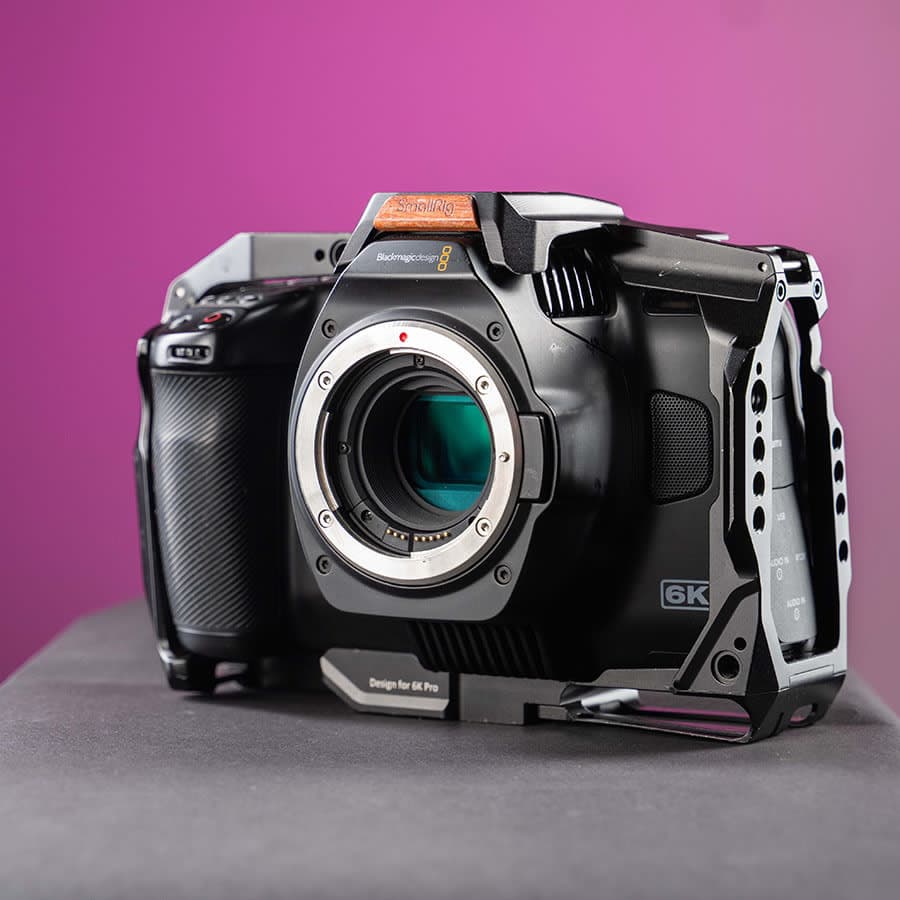
This guide helps you buy smart. You'll learn what to check when buying new or used. You'll spot potential problems before they cost you money. You'll understand which accessories matter and which don't.
The 6K Pro launched in 2021 at £2,135. Five years later, it's still a strong choice. Newer models cost more, making the 6K Pro excellent value for professionals and serious enthusiasts. The used market offers even better deals if you know what to look for.
Featured Picks at a Glance
Brand New Body – Best for warranty peace of mind – £2,135
Perfect for commercial work where clients expect reliability. Full two-year warranty.
Certified Refurbished – Best value for professionals – £1,695
Factory-inspected with six-month warranty. Works like new.
Used with Low Hours – Best for budget-conscious filmmakers – £1,400-£1,600
Cameras under 500 hours with minimal wear. Always check the shutter count first.
Complete Kit (Used) – Best for immediate production – £2,200-£2,600
Body plus batteries, media, and rig. Saves £400+ versus buying separately.
Body Only (High Usage) – Best for backup camera – £1,100-£1,300
Higher shutter counts (1,000+ hours) but mechanically sound. Perfect as a B-camera.
What to Look For When Buying
Shutter Count and Usage Hours
The 6K Pro tracks usage hours in its menu. This number matters enormously.
Why it matters: Sensors and mechanical parts wear out. A camera with 2,000 hours has worked hard. One with 200 hours is barely used.
What to avoid: Sellers who won't show the shutter count. Missing usage data suggests heavy commercial use or tampering. Don't trust vague descriptions like "lightly used" without proof.
Recommended specs: Under 500 hours is ideal. 500-1,000 hours is acceptable with a price reduction. Above 1,000 hours needs a significant discount (30-40% off retail).
Screen Condition and Functionality
The tilting 5-inch HDR touchscreen is essential. It controls focus, exposure, and menu navigation. Screen repairs cost £300-£400 from Blackmagic.
Why it matters: A damaged screen hampers every shoot. The touchscreen controls focus peaking, false colour, and critical settings. Physical damage often means rough handling elsewhere.
What to avoid: Deep scratches that affect visibility. Dead pixels in the centre of the screen. Unresponsive touch zones. Cracked housings around the screen.
Recommended specs: Factory screen protector intact or quality aftermarket protection. Full touch response across all zones. Smooth tilting with no excessive play.
Port Integrity and Connectivity
The 6K Pro has USB-C, full-size HDMI, dual mini XLR inputs, and SDI output. These ports take constant abuse. Port failure means expensive motherboard repairs.
Why it matters: Loose HDMI ports cause dropouts during monitoring. Damaged USB-C prevents firmware updates and power delivery. Faulty XLR inputs ruin professional audio recording.
What to avoid: Wiggling or loose connections. Bent pins on SDI output. Corrosion inside USB-C port. Stripped threads on XLR inputs.
Recommended specs: All ports should feel snug. No visible damage to housings. Test each port with cables before buying.
Internal ND Filters
The built-in 2, 4, and 6-stop ND filters are a key feature. They're mechanical and can fail. Replacement costs £400+ through factory service.
Why it matters: Working ND filters eliminate external filter systems. They save time on location. Broken NDs severely limit outdoor shooting.
What to avoid: Grinding sounds when engaging filters. Uneven exposure across the frame. Filters that won't disengage. Visible scratches or dirt on filter elements.
Recommended specs: Smooth engagement with audible click. Even exposure with each filter. Clear glass with no defects when viewed through the lens mount.
Battery and Power System
The 6K Pro uses NP-F570 batteries or DC power. Battery performance degrades over time. Original Blackmagic batteries cost £45 each. Third-party options start at £15.
Why it matters: Battery life determines shoot duration. Degraded cells cause unexpected shutdowns. The camera draws substantial power—genuine batteries deliver 45-60 minutes of 6K recording.
What to avoid: Swollen or damaged battery contacts. Third-party batteries without proper circuitry. Missing battery door or loose latch.
Recommended specs: At least two genuine or quality third-party batteries included. Clean and springy battery contacts. 80%+ capacity remaining.
Sensor and Image Quality
The Super 35 sensor must be pristine. Dead pixels, dust, and sensor damage are deal-breakers. Professional sensor cleaning costs £80-£120.
Why it matters: Sensor defects appear in every frame. Dead pixels need cloning in post. Heavy dust affects sharpness and requires professional cleaning.
What to avoid: Clusters of dead pixels (1-2 isolated pixels are acceptable). Visible scratches on the sensor. Heavy dust accumulation. Oil spots from improper cleaning.
Recommended specs: Record test footage at ISO 400 and 3200 against a grey card. Check for hot pixels in shadows. Inspect the sensor with a torch at 45 degrees for dust and scratches.
Top Recommendations by Budget
Under £1,500: Entry Point for Serious Work
At this price, expect used bodies with moderate hours. The 6K Pro rarely drops below £1,100 for working units.
Best option: Used body-only with 800-1,200 hours from reputable sellers. Budget £200 for essentials (batteries, CFast card, cage). Total: £1,300-£1,500.
What you get: Full 6K recording, professional codecs, and built-in NDs. Expect cosmetic wear but solid functionality.
Trade-offs: Higher shutter count means shorter remaining life. May need sensor cleaning. Likely missing original packaging and accessories.
£1,500-£2,000: Sweet Spot Territory
This range offers the best value. You'll find low-hour used units, certified refurbished models, and occasional new stock discounts.
Best option: Certified refurbished from authorised dealers at £1,695. Or used units under 400 hours at £1,500-£1,700. Add £300 for starter accessories.
What you get: Near-new condition with warranty. Minimal wear. Often includes original packaging. Refurbished units carry six-month warranties.
Trade-offs: Limited accessory bundles. May need to source batteries and media separately. Refurbished stock varies in availability.
£2,000-£2,500: Complete Production Package
This budget covers ready-to-shoot kits or brand-new bodies with essential accessories.
Best option: New body at £2,135 with educational discount (if eligible). Or used complete kits at £2,200-£2,400 including cage, batteries, CFast cards, and follow focus.
What you get: Full warranty on new units. Complete accessory ecosystem on used kits. Immediate production capability.
Trade-offs: Kits may include accessories you don't need. New bodies require separate accessory investment (£400-£600).
£2,500+: Premium Setup
This budget covers new body plus professional accessories. Or multiple cameras for multi-cam productions.
Best option: New body (£2,135) plus SmallRig cage (£180), Tilta Nucleus Nano follow focus (£450), four genuine batteries (£180), 512GB CFast card (£280), V-mount battery plate (£150). Total: £3,375.
What you get: Professional-grade rig ready for client work. Reliable power for full-day shoots. Fast media for continuous 6K recording. Follow focus for precise control.
Trade-offs: Significant upfront investment. Accessories may exceed body value. Consider phased purchasing if budget allows.
Common Mistakes to Avoid
1. Buying without testing the ND filters. These fail more often than other systems. Always engage each ND stop and record test footage. Replacement costs £400+.
2. Overlooking CFast card compatibility. Not all CFast 2.0 cards work reliably. SanDisk Extreme Pro and Wise Advanced cards are verified. Budget brands cause dropped frames. Expect £180-£280 for 256-512GB.
3. Ignoring firmware version. Older firmware lacks critical features and bug fixes. Check current version (8.4 as of 2026) before buying. Updating requires USB-C cable and 30 minutes.
4. Underestimating accessory costs. The body is just the start. Budget £600-£800 for essentials: cage (£150-£200), batteries (£90-£180), CFast cards (£180-£280), HDMI cable (£25), XLR cables (£40).
5. Buying from untested sellers. The used market includes rental houses offloading high-hour units. Stick to established retailers with return policies. Or verified private sellers with detailed service history.
6. Skipping the sensor inspection. Five minutes with a torch reveals dust, scratches, and dead pixels. Record test footage at ISO 3200 against a grey wall. Professional cleaning costs £80-£120.
7. Assuming all EF lenses work perfectly. Electronic communication varies by lens generation. Test autofocus (if applicable) and aperture control with your specific lenses. Older third-party lenses may have compatibility issues.
8. Neglecting the EVF option. The optional electronic viewfinder (£445) transforms outdoor shooting. If buying used, verify EVF compatibility and test the connection. Aftermarket EVFs rarely match the official unit.
9. Overlooking warranty transfer policies. Blackmagic warranties are non-transferable. Used purchases have zero warranty unless from authorised refurbished programmes. Factor repair costs into your budget.
10. Buying internationally without research. PAL/NTSC region settings and power supply differences matter. Warranty service requires shipping to regional centres. Import duties add 20% VAT plus handling fees.
Frequently Asked Questions
Is the 6K Pro worth buying in 2026, or should I wait for newer models?
The 6K Pro remains highly relevant. Its sensor, codec options, and build quality compete with cameras costing £1,000 more.
If you need a camera now, the 6K Pro delivers professional results. Waiting means missing paid opportunities.
How many hours is too many for a used 6K Pro?
Under 500 hours: excellent condition, minimal wear. 500-1,000 hours: acceptable with inspection, expect 30% discount. 1,000-1,500 hours: heavy use, 40% discount required. Above 1,500 hours: suitable only as backup with 50%+ discount.
What's the real-world battery life?
Genuine NP-F570 batteries deliver 45-60 minutes recording 6K Blackmagic RAW at Q5. Third-party batteries (Neewer, Powerextra) provide 35-50 minutes. V-mount batteries extend this to 3-4 hours.
Screen brightness, ND filter use, and temperature affect runtime. Always carry four batteries minimum for professional work.
Can I use SD cards instead of CFast?
No. The 6K Pro requires CFast 2.0 for internal recording. SD cards work only in the secondary slot for backup recording at reduced quality.
CFast cards are expensive (£180-£280 for 256-512GB) but necessary for full 6K capability.
Do I need the electronic viewfinder?
Not essential but highly valuable. The EVF (£445) provides critical monitoring in bright sunlight when the screen washes out. It improves handheld stability and focus precision.
If shooting outdoors frequently, it's worth the investment. Indoor studio work manages fine with just the screen.
What lenses work best with the 6K Pro?
The EF mount accepts Canon EF lenses and third-party alternatives. Sigma Art series (18-35mm f/1.8, 50-100mm f/1.8) are popular for sharpness and speed.
Rokinon Cine DS lenses offer manual focus with cine features at lower prices. Native speedboosters enable full-frame lens use with light gain.
How does the 6K Pro compare to the original 6K?
The Pro adds built-in ND filters (2, 4, 6 stops), tilting screen, brighter display, improved battery system, and optional EVF. These upgrades justify the £600 price difference.
The original 6K remains capable but lacks the Pro's on-set convenience.
Is the 6K Pro suitable for photography?
It's primarily a cinema camera, not a stills camera. It captures DNG stills at 6144 x 3456 resolution. But it lacks fast burst modes and autofocus performance of dedicated photo cameras.
Use it for stills only when you're already shooting video.
What's the learning curve like?
Moderate. The menu system is intuitive compared to traditional cinema cameras. DaVinci Resolve integration is seamless.
Expect 2-3 weeks to master exposure tools, focus peaking, and codec selection. Prior DSLR experience helps. YouTube tutorials accelerate learning.
Can I shoot handheld or do I need a rig?
The camera weighs 1.3kg and balances poorly without accessories. Handheld shooting is possible for short takes but fatiguing.
A basic cage (£150-£200) with side handle improves ergonomics significantly. Shoulder rigs (£300-£500) enable comfortable extended handheld work.
What's included with a new purchase?
New 6K Pro includes: camera body, lens cap, battery, power supply with international adapters, USB-C cable, DaVinci Resolve Studio activation card (£259 value), and user manual.
You'll need to purchase separately: CFast cards, additional batteries, cage, cables, and lenses.
Where should I buy: online or in-store?
Both have advantages. Online retailers (CVP, Wex Photo Video) offer competitive pricing and easy returns. Physical stores (Calumet, Park Cameras) allow hands-on testing.
For used cameras, in-person inspection is strongly recommended. Online used purchases should include detailed photos and return policies.
What to Check Before Buying: Verify seller reputation through reviews and trading history. Confirm return policy (minimum 14 days for online purchases). Request detailed photos showing serial number, screen condition, and port integrity.
Ask for shutter count verification. Ensure all included accessories are listed specifically.
Warranty Considerations: New purchases include two-year Blackmagic warranty. Refurbished units carry six months. Private used sales have zero warranty—factor repair costs into negotiations.
Extended warranties through retailers (£150-£200) cover accidental damage but exclude wear-and-tear items.
Discussion
Be the first to share your thoughts
No comments yet. Be the first to share your thoughts.